
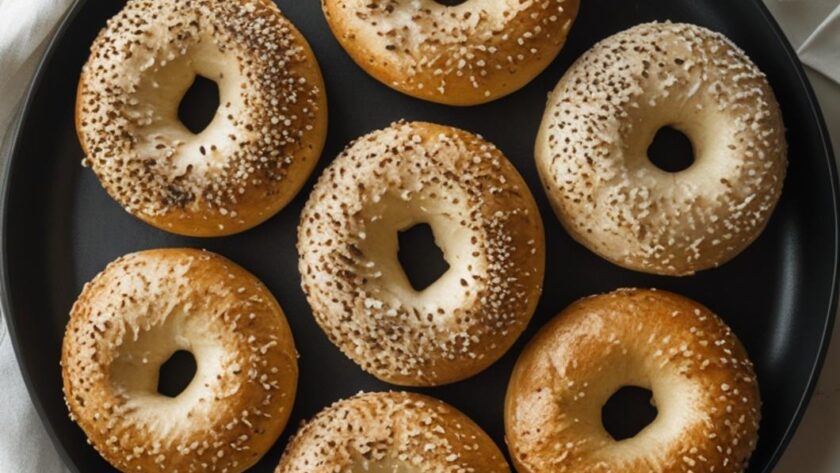
 Jacy
Jacy Few things rival the satisfaction of pulling a batch of warm, chewy bagels from your own oven. Forget the dense, store-bought versions; homemade bagels offer a superior crust, a perfectly textured interior, and the unbeatable aroma of fresh bread filling your kitchen.
While they may seem like a bakery-exclusive treat, making them at home is an achievable and rewarding project. This guide will walk you through a classic easy bagel recipe that demystifies the process, focusing on a foolproof bagel dough recipe that forms the perfect foundation. Get ready to roll, boil, and bake your way to bagel bliss.
Table of Contents
New York-Style Plain Bagels

Ingredients
- 4 cups (500g) bread flour, plus more for dusting
- 1 ½ cups (360ml) warm water (about 110°F/43°C)
- 2 teaspoons instant yeast
- 2 tablespoons granulated sugar, divided
- 2 teaspoons fine sea salt
- 1 tablespoon vegetable oil, for greasing
- 8 cups water (for boiling)
- ¼ cup (60ml) honey or barley malt syrup (for boiling)
- Optional toppings: Everything Bagel Seasoning, sesame seeds, poppy seeds, dried minced garlic, dried onion flakes
Step-by-Step Instructions
1. Make the Dough: In the bowl of a stand mixer fitted with a dough hook, combine the warm water, yeast, and 1 tablespoon of sugar. Let sit for 5 minutes until foamy. Add the bread flour and salt. Mix on low speed until a shaggy dough forms, then increase to medium speed and knead for 8-10 minutes until the dough is smooth, elastic, and pulls away from the sides of the bowl. This is the crucial stage for developing the right gluten structure in your bagel dough recipe.
2. First Rise: Lightly grease a large bowl with vegetable oil. Form the dough into a ball, place it in the bowl, and turn to coat. Cover with a damp kitchen towel or plastic wrap and let rise in a warm, draft-free spot for 60-90 minutes, or until roughly doubled in size.
3. Shape the Bagels: Punch down the risen dough and turn it out onto a lightly floured surface. Divide into 8 equal pieces (about 115g each). Roll each piece into a smooth ball. Press your thumb through the center of each ball to form a ring. Gently stretch and rotate the ring around your fingers to widen the hole to about 1.5 inches. Place the shaped bagels on a parchment-lined baking sheet.
4. Second Rise: Cover the shaped bagels loosely with the damp towel and let them rest for 30 minutes. During this time, preheat your oven to 425°F (220°C) and bring the 8 cups of water and honey (or malt syrup) to a boil in a wide pot.
5. Boil the Bagels: Carefully lower 2-3 bagels at a time into the boiling water. Boil for 1 minute per side (2 minutes total). Using a slotted spoon, remove the bagels and place them back on the parchment-lined sheet. While still wet, sprinkle on your desired toppings. This boiling step is the secret to that classic chewy crust and is essential for any true easy bagel recipe.
6. Bake: Transfer the boiled and topped bagels to the preheated oven. Bake for 20-25 minutes, rotating the pan halfway through, until the bagels are a deep, golden brown. Transfer to a wire rack to cool completely before slicing.
Tips & Variations
- Flour: While bread flour is ideal for chewiness, you can use all-purpose flour for a slightly softer result.
- Sweetener: For authentic flavor, use barley malt syrup in the dough and boil. Honey or brown sugar are fine substitutes.
- Flavors: Add 1 cup of raisins and 2 teaspoons of cinnamon to the dough for Cinnamon Raisin bagels. For a savory twist, knead in ½ cup of shredded sharp cheddar cheese and a teaspoon of garlic powder.
Serving & Storage

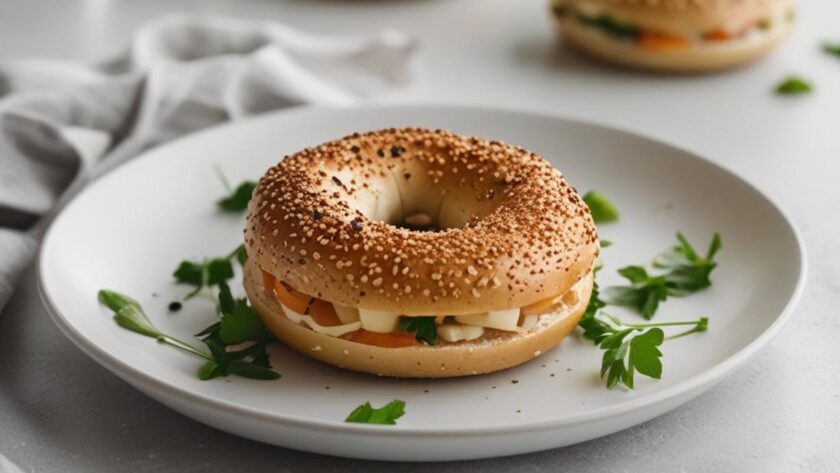
Serve fresh bagels sliced and toasted with cream cheese, lox, capers, and red onion for a classic treat. They also make excellent breakfast sandwiches. For storage, let bagels cool completely, then place them in an airtight bag at room temperature for 2-3 days. For longer storage, slice and freeze them in a freezer bag for up to 3 months. Toast directly from frozen.
Nutritional Benefits
Homemade bagels provide a good source of complex carbohydrates for sustained energy. Using whole wheat flour or adding seeds can increase the fiber content. You also control the sodium and avoid the preservatives often found in commercial varieties.
Common Mistakes to Avoid

- Over-proofing the shaped bagels: This can cause them to deflate in the boiling water. The 30-minute rest is usually sufficient.
- Skipping the boiling step: Boiling sets the crust and gives bagels their signature texture. Do not skip it.
- Not preheating the oven: A properly hot oven is necessary for the right “oven spring” and browning.
- Cutting too soon: Let bagels cool completely on a wire rack. Cutting them hot will make them gummy.
Final Conclusion
Baking your own bagels is a culinary adventure that yields delicious, impressive results. This easy bagel recipe proves that with a bit of time and patience, you can master the techniques of shaping, boiling, and baking. The heart of success lies in a well-developed, elastic bagel dough recipe. Once you’ve perfected the plain version, a world of flavors awaits. So, gather your ingredients, clear your counter, and get ready to enjoy the unparalleled taste of a truly fresh, homemade bagel.
FAQs
Why do you boil bagels before baking them?
Boiling bagels is a crucial step that sets the crust, giving it that distinctive shiny, chewy texture. The hot water gelatinizes the starches on the surface before they go into the oven, which is what creates the thick, crisp crust.
Can I make bagels without a stand mixer?
Absolutely. You can mix the dough with a wooden spoon and then knead it by hand on a floured surface for about 10-12 minutes until it becomes smooth and elastic. It’s a great workout and gives you a feel for the dough’s texture.
My bagels turned out dense. What went wrong?
Dense bagels are often caused by using old or inactive yeast, not kneading the dough long enough to develop gluten, or over-proofing the shaped bagels so they collapse. Ensure your yeast is fresh and knead until the dough is very smooth.
Can I make the dough ahead of time?
Yes! After the first rise, punch down the dough, place it in an oiled bowl, cover tightly, and refrigerate for up to 24 hours. When ready to bake, let the cold dough sit at room temperature for 30 minutes, then proceed with shaping, resting, boiling, and baking.
What’s the difference between using honey and barley malt syrup?
Barley malt syrup is traditional and gives bagels their authentic, slightly malty flavor and deep brown color. Honey is a more readily available substitute that will sweeten the dough and help with browning, but the flavor profile will be slightly different.